theskindirectory
THE most comprehensive and deep-dive website review service for skincare businesses
★ Get your own unique FAQ + Selling Points on your profile page
★ be seen by 1000s of daily visitors and win new business
theskindirectory.com Miniblog
Why Is Your Air-Conditioned Office Quietly Wrecking Your Skin?
 Your office air may look innocent enough: chilled, odourless, faintly bureaucratic. But skin notices what the rest of you ignores. Sit for hours beneath air conditioning or central heating and the room often becomes drier than your face would ideally like, which means water escapes more easily from the skin. The result can be that familiar trio: tightness, flaking, irritation.
It isn’t only the temperature. Indoor air can carry dust, smoke and other irritants that bother already sensitive skin, so decent ventilation and regular cleaning are less glamorous than serum adverts, but more useful. A humidifier may help if the air is especially parched, though only if it is cleaned properly; otherwise, you’re manufacturing a fresh problem.
Screens, meanwhile, have been accused of ageing us from across the desk. The evidence that ordinary blue light from laptops and phones causes major skin damage is much shakier than the skincare industry sometimes implies. Breaks from screens still matter, of course, for your eyes, comfort and sleep, just not necessarily because your moisturiser needs a digital bodyguard.
There’s also the indoor-living trap: less daylight, less awareness, and then a brisk walk or sunny commute catches you off guard. Sun protection still matters when UV levels warrant it, even through windows and short spells outside.
None of this means indoor life is bad for your complexion. It simply means your skin, after ten hours in a zealously cooled office, may require a bit of kindness: moisturiser, lukewarm showers, airflow, and a little humidity.
Posted on 26 September 2026
The Most Boring Skincare Habit Is Usually The One That Works
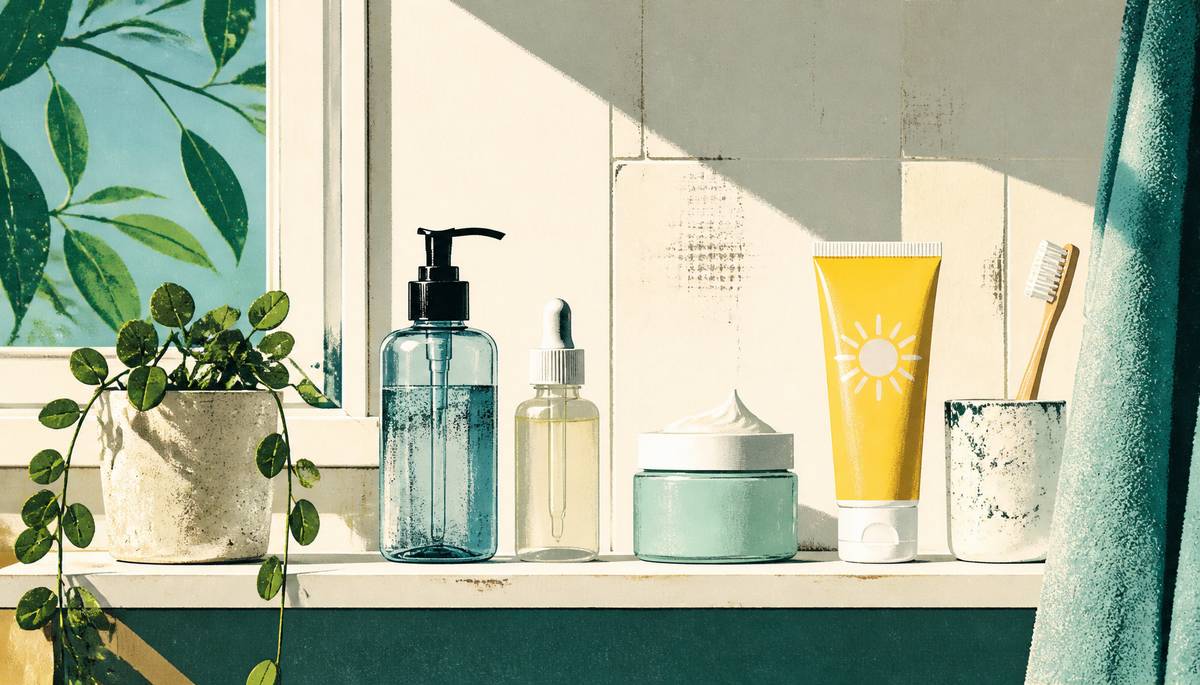 There is a particular glamour to skincare that suggests the answer must arrive in a frosted bottle with a pipette and a price tag capable of inducing mild palpitations. It usually doesn’t.
The dull truth is that skin responds rather well to habits. A cleanser that suits you, used regularly, does the unshowy work of removing grime, oil, make-up and sunscreen without leaving your face feeling as if it has been scrubbed with regret. A moisturiser, sensibly chosen, helps support the skin barrier and cut water loss, especially in dry weather or central heating’s cheerless embrace. It needn’t be ruinously expensive. It needs to be right for your skin.
Then there is sunscreen, the least thrilling and most useful resident of the bathroom shelf. Broad-spectrum protection, applied routinely, does more for preventing ultraviolet damage and premature ageing than a heroic collection of “corrective” products ever will if SPF is treated as optional.
People often come unstuck by trying everything at once. Add several active ingredients together and you may irritate your skin while also making it impossible to tell which product deserves praise and which one has made your face stage a revolt.
Fancy formulas can be lovely. They are not magic. Steady, basic care usually wins, though it does so with all the theatrical flair of a sensible shoe.
Posted on 21 September 2026
Can Cortisol Trigger A Breakout Overnight?
 A spot can seem to arrive with the speed and insolence of bad news, and cortisol is one reason why. This stress hormone is part of the body’s built-in alarm system. If stress lingers, cortisol can encourage more oil production, stir up inflammation and meddle with the skin barrier. For some people, that is quite enough to help a breakout appear alarmingly fast, if not strictly overnight.
The trouble rarely stops there. Stress can worsen acne, but it may also aggravate eczema, psoriasis and itching. Skin already inclined to misbehave often needs only a small shove. Then comes sleep, or rather the lack of it. A fretful night does the complexion no favours: the skin’s repair work is less efficient, and by morning it may look dull, puffy or generally put out.
There is also the human factor. Stressed people pick, touch, skip their routine, eat oddly, drink more and inspect their faces at hours when no good can come of it. These habits can be as damaging as the biology.
That said, not every blemish is a psychological event. Skin complaints have several causes, and persistent trouble deserves proper advice. Still, the link between stress and skin is real enough. Exercise, decent sleep, good food and actual relaxation may help more than another heroic dab of cream.
Posted on 16 September 2026
Sunscreen Is Not A Summer Product
 Your skin doesn’t care what month it is. It reacts to what’s happening around it, and British weather has all the consistency of a drunk man trying to assemble patio furniture.
Winter usually strips moisture from the skin. Cold air is dry, indoor heating is worse, and suddenly your face feels tight, flaky or mildly offended. That’s when a richer cream often earns its keep, especially if irritation starts creeping in. Summer flips the problem. Heat and humidity can ramp up sweat and oil, so the thick stuff that felt comforting in January can sit on the skin like a duvet on a bus. Lighter moisturisers and gentler cleansers often make more sense.
What shouldn’t change is sunscreen. Ultraviolet rays don’t vanish because the sky looks miserable. Sun exposure carries on through the year, so SPF isn’t a beach accessory; it’s basic maintenance.
The mistake is treating skincare like a strict seasonal costume change. You don’t need to replace every bottle four times a year like some deranged bathroom chemist. Usually, a few tweaks do the job: a heavier moisturiser when the air turns dry, lighter products in sticky weather, and easing off exfoliation when your skin seems stressed.
Ignore the calendar. Watch your skin instead. It’s a better witness than the weather forecast. Posted on 9 September 2026
Read The Back, Ignore The Hype: The Smarter Way To Buy Skincare
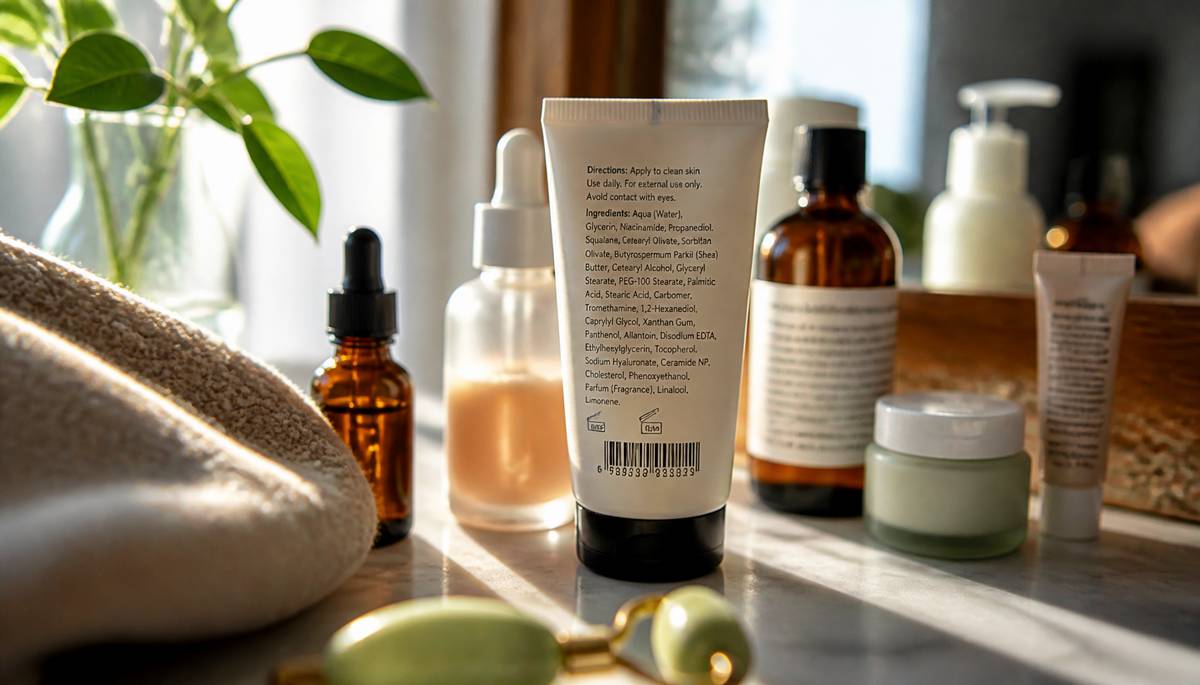 Skincare bottles are terrible little show-offs. They shimmer, they boast, they promise “revitalising” miracles in fonts so earnest you’d think they’d personally tucked in the moon. Turn them round.
The back is where the useful bits live. Start with the active ingredients, because those are the workers, not the chatterboxes. Retinoids, niacinamide, vitamin C and exfoliating acids are there for specific jobs, so the sensible question is not “How many clever things are in this?” but “Does this help my skin do what I want it to do?”
Then inspect the ingredient list with a cool head. Ingredients usually appear in order of amount, with the biggest players near the top, though rules differ for very small concentrations. So if a star ingredient is skulking near the bottom, it may not be doing much heavy lifting.
Now for the front label, which is often a pageant of splendid nonsense. “Luxury”, “advanced” and “age-defying” sound grand, but they tell you very little about how a product performs. “Natural” is no guarantee of gentleness or effectiveness either.
If your skin is touchy, keep an eye out for fragrance or anything you already know causes trouble. And don’t be fooled by a long ingredient list. More is not automatically better. Better is better.
Posted on 4 September 2026
Why "More Skin Care" Can Backfire Fast
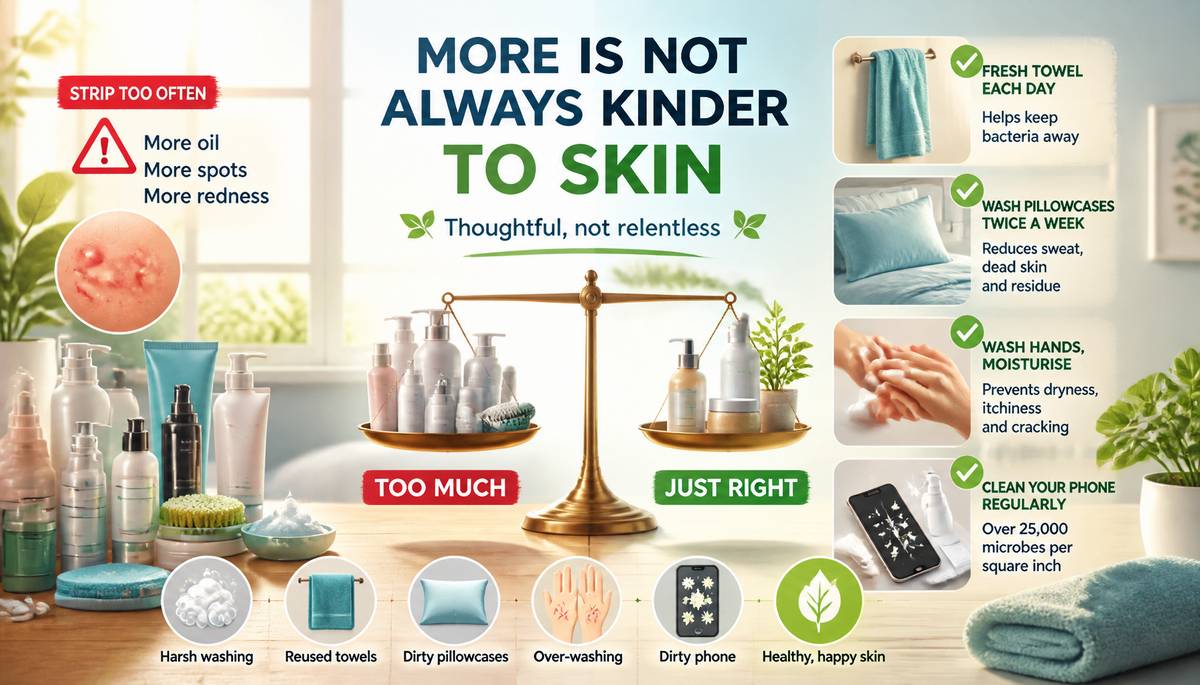 More is not always kinder to skin. Sometimes it is simply louder.
A careful routine can help, and surveys suggest roughly half of Americans follow one with some consistency. But dermatologists warn that irritation often comes not from neglect, but from excess. Strip the skin too often with cleansers and harsh washing, and it may answer with more oil, more spots, more redness. Skin has its own stubborn logic: push too hard, and it pushes back.
The quieter culprits are easy to miss. A damp towel used again and again can collect oil and bacteria, which is bad news for acne-prone skin. If breakouts are a problem, a fresh face towel each day is a sensible move. Pillowcases matter too; sweat, dead skin and residue build up quickly, so washing them twice a week can help reduce flare-ups.
Hands suffer from good intentions. Frequent washing is important, but done constantly, or without moisturiser afterwards, it can leave skin dry, itchy and even cracked.
Then there is the phone, pressed against the cheek like an obedient little germ magnet. Screens can carry astonishing amounts of bacteria, with some reports putting the figure above 25,000 microbes per square inch. Clean it regularly with an appropriate alcohol-and-water solution or a phone-safe disinfectant.
Skin care works best when it is thoughtful, not relentless. Posted on 29 August 2026
How One Influencer's Lash-Serum Damage Helped Launch Volufiline Mania
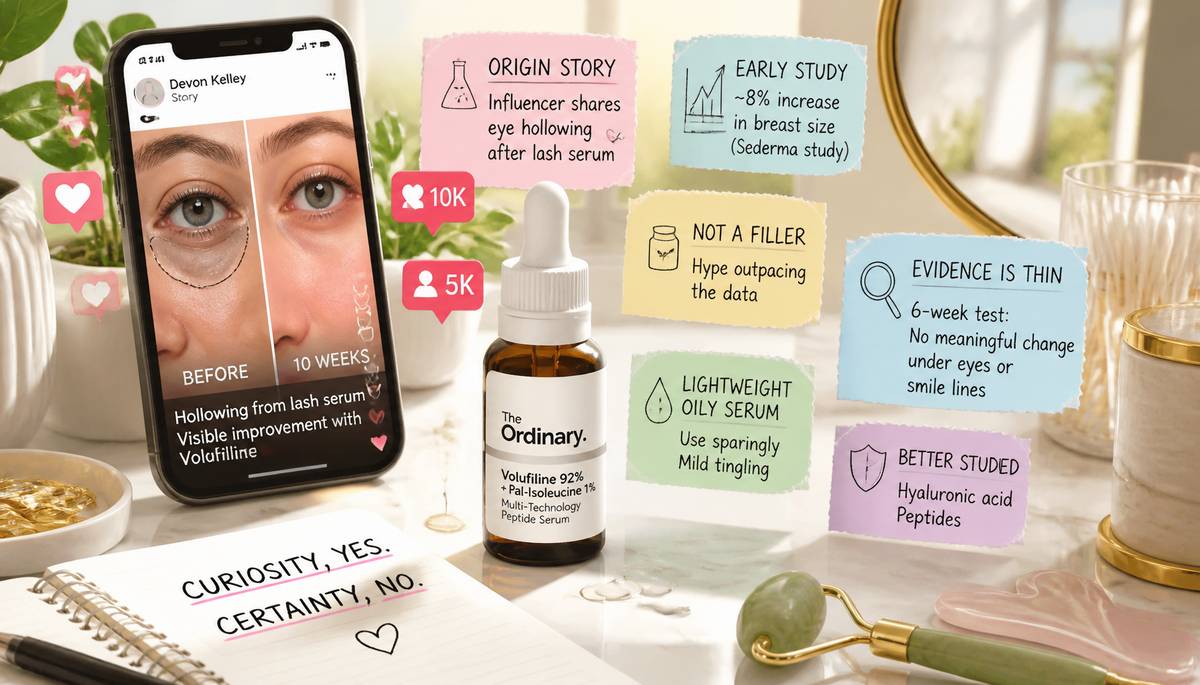 Volufiline’s latest glow-up didn’t start in a lab-coated miracle moment. It took off after influencer Devon Kelley shared the hollowing around her eyes she said followed use of a lash serum containing prostaglandin analogues, a side effect that can cause orbital fat loss. After documenting visible improvement with a Volufiline product over about 10 weeks, she helped turn a niche ingredient into beauty’s newest fixation.
That origin story matters, because Volufiline is now being pitched online as a kind of bottled filler. It isn’t. The excitement partly traces back to a study from Sederma, the ingredient’s original manufacturer, which reported an increase of roughly 8% in breast size among test subjects. Social media did what social media does and ran with it.
The Ordinary’s Volufiline 92% + Pal-Isoleucine 1% has become the affordable poster child of the trend at £21-ish, aimed at areas like under-eyes and smile lines. It’s lightweight but oily, best used sparingly and precisely, and can sit alongside other active skincare. Some people notice mild tingling.
But the evidence for facial plumping remains thin. In CNN Underscored’s six-week test, the writer saw no meaningful change under the eyes or around smile lines. That doesn’t mean nobody will. It does mean the hype is outrunning the data, especially compared with better-studied ingredients such as hyaluronic acid and peptides. Curiosity is fair. Certainty isn’t.
Posted on 23 August 2026
Inside The 10-Step Routine A 61-Year-Old Supermodel Refused To Call "Superior"
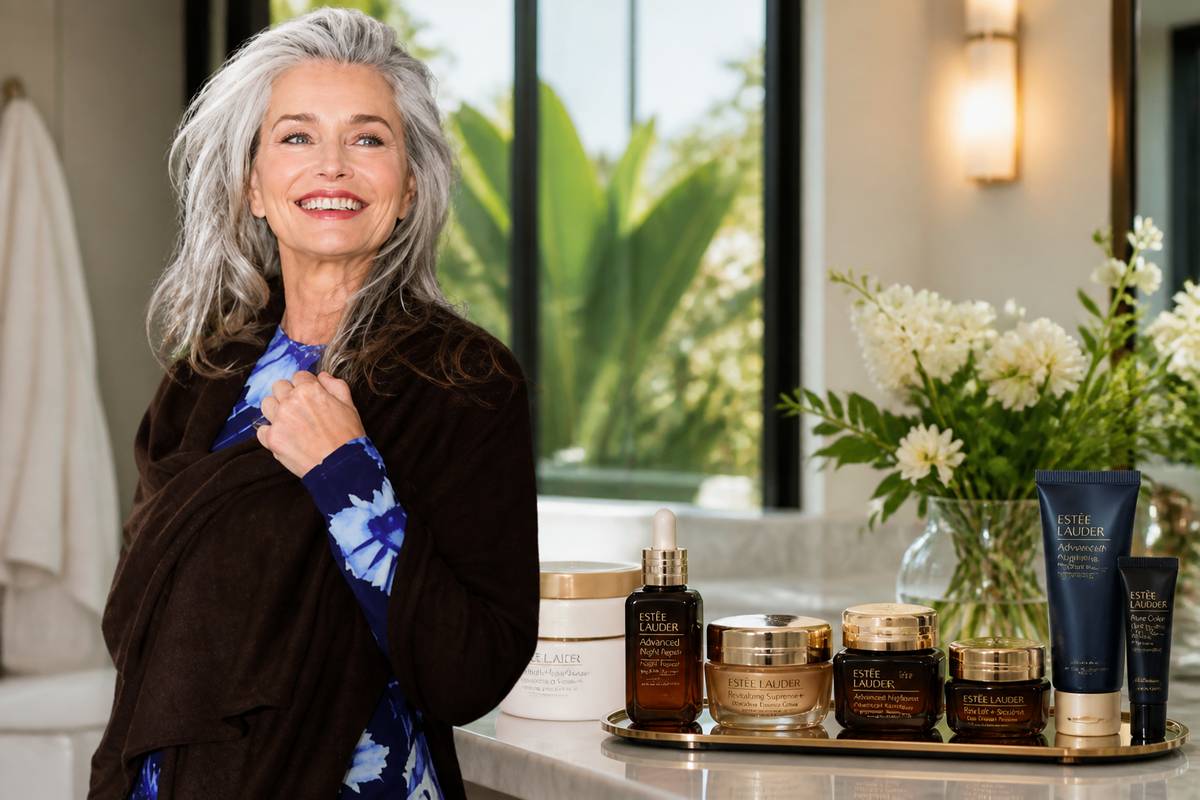 Paulina Porizkova has shared the nightly routine she followed for months before her July wedding to Jeff Greenstein, but she was careful to strip away any sense of beauty hierarchy. Her point was simple: this routine worked for her skin, at 61, and it was never meant to be called “superior”.
From December until she left her apartment in June for the wedding and a new chapter, she said she kept to the same discipline she gave her diet and exercise. The result was the luminous complexion seen in the wedding photographs from Northern Italy, where she married Greenstein on 3 July.
Her evening ritual is thorough but focused on recovery. First came Estée Lauder’s Advanced Night Repair Cleansing Balm to lift away make-up, followed by Revitalizing Cleansing Gel for a second, gentler cleanse. Then she layered the brand’s Advanced Night Repair Serum, Eye Lift + Sculpt Eye Cream and Revitalizing Supreme+ Night Power Bounce Creme Moisturiser, products aimed at hydration and helping skin look firmer.
She finished with Advanced Night Repair Overnight Treatment and Pure Color Envy Lip Repair Potion for extra moisture. The last steps were practical rather than glamorous: out came the contact lenses, then a blue-light whitening toothbrush and a Waterpik.
It is a long routine, yes, but her real message was quieter and wiser. Consistency matters. Superiority does not.
Posted on 16 August 2026
The Ingredient Behind Eucerin's Dark Spot Push Is More Surgical Than You Think
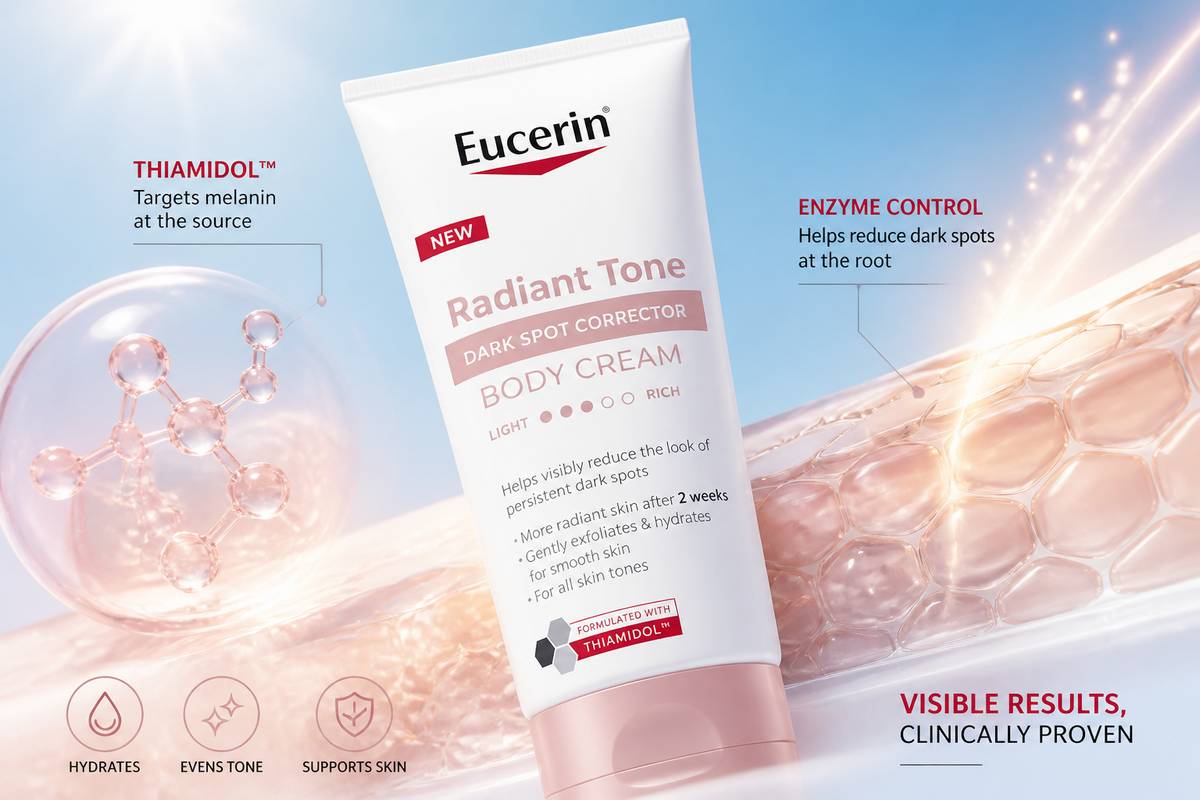 Eucerin’s latest dark-spot effort is less about soft-focus radiance and more about enzyme control. The key ingredient, thiamidol, was developed to target tyrosinase, the enzyme involved in melanin production, which is why the brand’s new body products feel closer to treatment than simple moisturiser.
The move makes sense. Eucerin introduced its Radiant Tone face line in 2025, and is now extending the same idea below the neck with two formulas aimed at uneven tone, sun marks and age-related pigmentation. It is a telling shift: shoppers increasingly want body care to work with the same precision they expect from facial skincare.
The new duo covers different jobs. The Radiant Tone Body Cream is designed for rougher, higher-friction areas such as knees and elbows, with lactic acid for mild exfoliation, hyaluronic acid for hydration and provitamin B5 to support the skin. The Radiant Tone Body Lotion takes a lighter route, pairing hyaluronic acid with antioxidant licochalcone A to help skin look more even and brighter over time.
Both are suitable for all skin types and tones, and free from parabens and dyes. According to Eucerin, regular use visibly reduces dark spots. In the brand’s consumer testing, 98 per cent agreed the lotion reduced their dark spots’ appearance, while 94 per cent said skin looked more radiant. That is the real pitch here: body care with a clinical bent, not just a cosmetic gloss.
Posted on 12 August 2026
Why Are Simple Routines Beating Miracle Products?
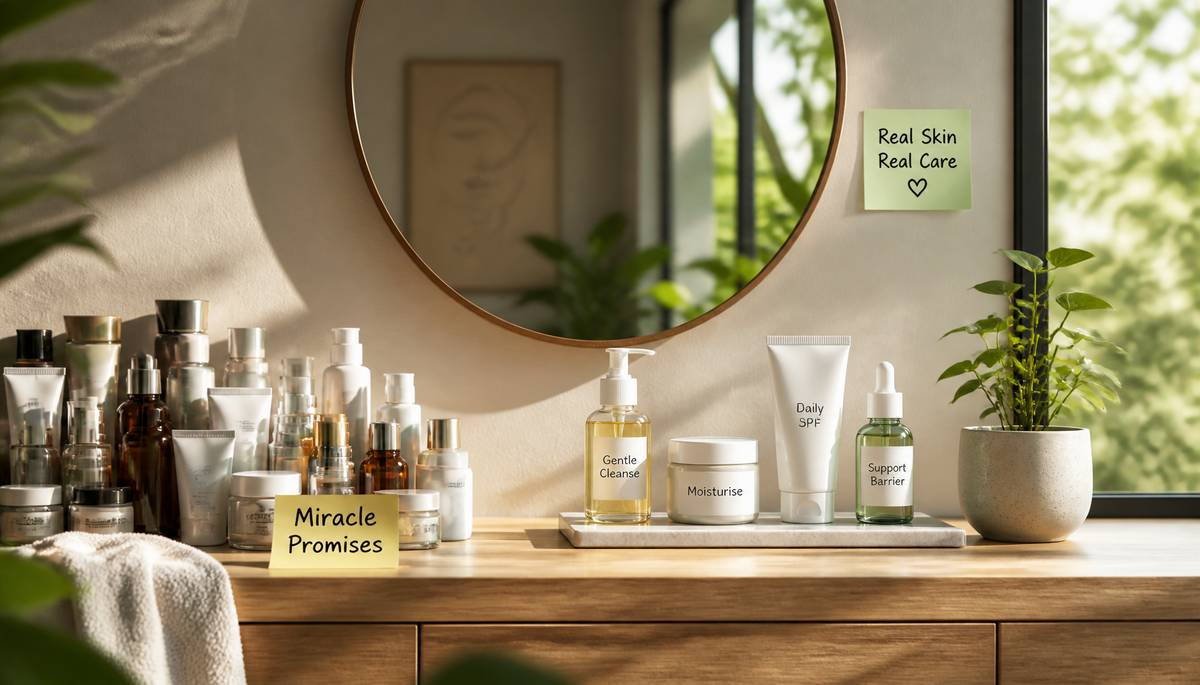 A curious thing has happened in skincare: the modest routine is outshining the miracle jar. After years of filters, airbrushed photos and impossible promises, people are recognising that skin does not need to look unreal to look good.
That change matters. It shifts attention from chasing flawless perfection to supporting skin that is calm, comfortable and strong. A basic routine built around gentle cleansing, proper moisturising, daily sun protection and ingredients that help the skin barrier do its job often makes more sense than a shelf full of dramatic claims.
There is also a growing willingness to accept what real skin looks like. Pores are not defects. Fine lines, freckles and uneven texture are not signs of failure. They are ordinary features of living skin, and many people now see them as entirely compatible with looking healthy and attractive.
Simple routines also encourage better expectations. Skincare can improve hydration, texture and overall appearance, but it cannot remake a face overnight. Knowing that helps people spend more wisely and avoid the disappointment that follows exaggerated marketing.
Perhaps that is the real luxury now: not a fantasy of perfection, but skin that functions well and reflects steady care. Less spectacle, more substance. And, in the end, that tends to look better anyway.
Posted on 3 August 2026
Can A Selfie Really Tell You If Your Moisturiser Is Working?
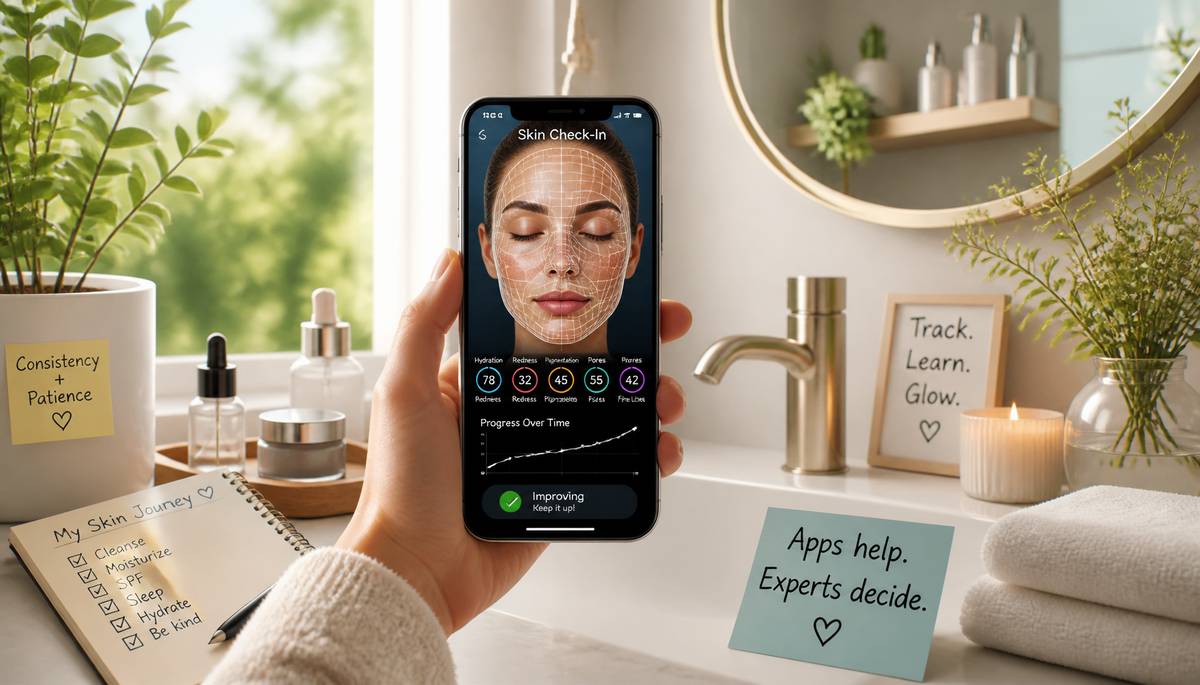 A selfie can tell you something about your moisturiser, but not the whole story. Think of it as a skin check-in, not a courtroom verdict.
By 2026, many phone apps and smart skincare devices can scan a face photo and estimate things like hydration, redness, pigmentation, pores and fine lines. That matters because it moves skincare away from pure guesswork. If your skin looks calmer, better hydrated or less irritated over several weeks, those tools may help you spot a real pattern rather than relying on memory and bathroom optimism.
That tracking feature is the clever bit. A single photo is useful; a series of photos taken over time is far more revealing. You can get a clearer sense of whether a new cream is actually helping or just sitting there looking expensive.
Still, a selfie is easily fooled. Bad lighting, a different camera, or simply tilting your face can skew the result. And no app can fully judge stress, hormones, diet, sleep or an underlying skin condition from one image. Skin is dramatic. It rarely performs the same way twice.
So yes, your phone can be a helpful skincare sidekick. But if something keeps flaring up, changing, or just seems off, a dermatologist or qualified skin specialist is still your best bet. Smart tracking helps. Proper expertise matters more.
Posted on 29 July 2026
Forget Instant Glow: PDRN Sells The Slow Repair Story
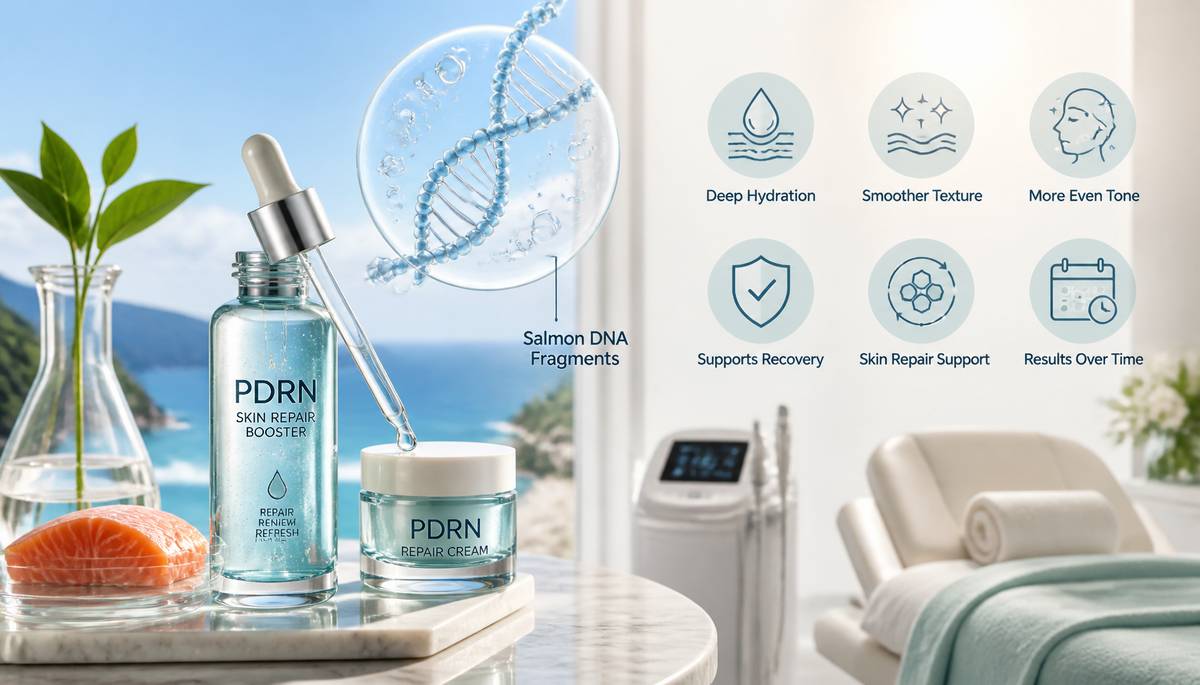 PDRN sounds like something a dentist mutters before charging you extra, but it’s actually a skincare ingredient drawing attention for a more sensible reason: it backs repair rather than chasing a flashy overnight effect.
It stands for polydeoxyribonucleotide, which is a mouthful, so fair enough that nobody’s leading with that. It’s made from tiny, highly purified DNA fragments, usually sourced from salmon. Important point: it does not rewrite your DNA or do anything dramatic like that. The idea is much less sci-fi and far more practical. It may help create the right conditions for skin to get on with its own renewal.
That’s why it turns up in products and professional treatments aimed at dryness, fine lines, uneven tone and skin that looks worn out, stressed or a bit fed up with life. People also use it to support recovery after certain cosmetic procedures, because the focus is on skin quality, not just a quick cosmetic disguise.
And that’s the real selling point. PDRN is about the slow repair story. Hydration may improve, texture may look smoother, and skin can appear fresher with steady use, but it’s not instant-magic stuff. Results vary, of course, depending on the person, the formula and how consistently it’s used. Still, its rise makes sense: people want science-led skincare that aims to help, not just hide.
Posted on 24 July 2026
Forget Anti-Ageing: Longevity Skin Care Wants To Train Your Skin Cells To Last
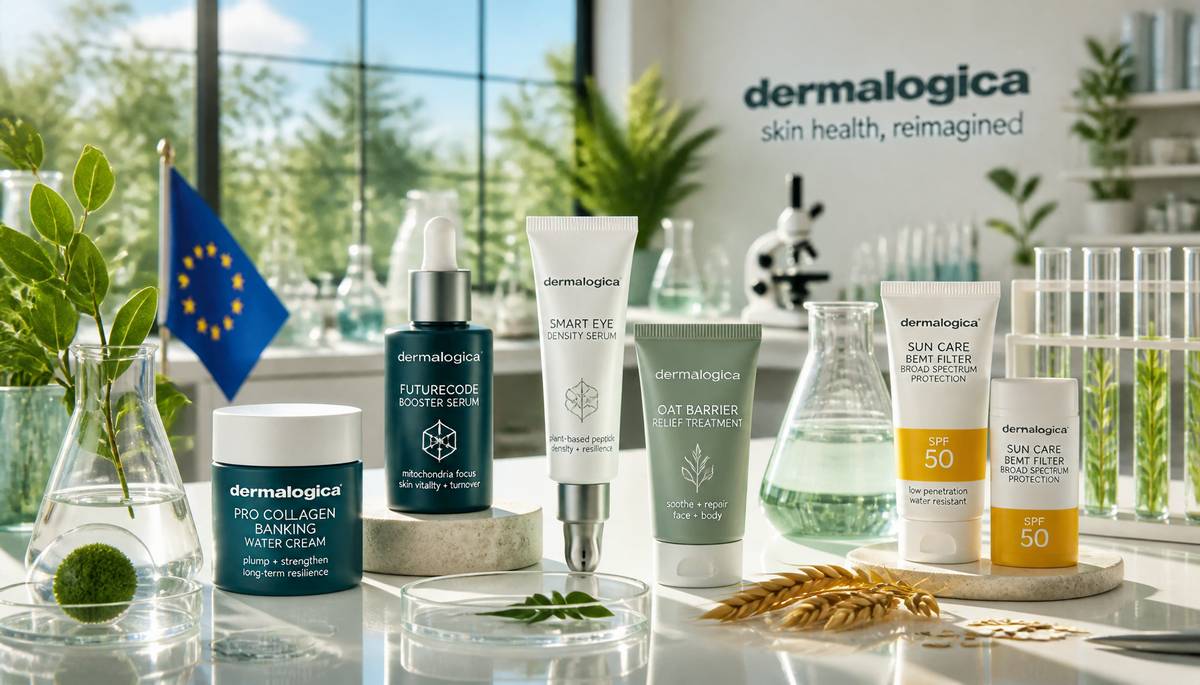 Skin care is having a small philosophical crisis. Anti-ageing used to mean sanding down the evidence. Now the smarter idea is to keep skin functioning well for longer, which is less sci-fi than it sounds and more about cell energy, barrier strength and repair.
Dermalogica is leaning hard into that shift. Its recent Pro Collagen Banking Water Cream marked its first proper move into longevity, and FutureCode Booster Serum followed in May with a mitochondria-focused approach aimed at supporting skin vitality and turnover before decline becomes obvious. The point is not to “reverse time”. It’s to help skin stay resilient.
That same logic runs through the rest of its pipeline. Smart Eye Density Serum, due in August, targets hollowing and loss of density around the eyes using a plant-based oleosome fusion peptide growth factor. There is also an over-the-counter oat treatment on the way for sensitive, eczema-prone and dermatitis-prone skin, expanding its barrier-repair line for face and body.
Sun care is another major focus. Dermalogica is preparing launches with the newly approved filter BEMT, already familiar in Europe, which offers broad-spectrum protection and low penetration. Europe gets the first products this year, the US next year.
Behind all this is heavy clinical testing, EU sunscreen manufacturing, and a fairly clear bet: consumers are tired of TikTok skin fads and want proof, not theatre. Posted on 15 July 2026
The Body Parts Your Sunscreen Routine Keeps Missing
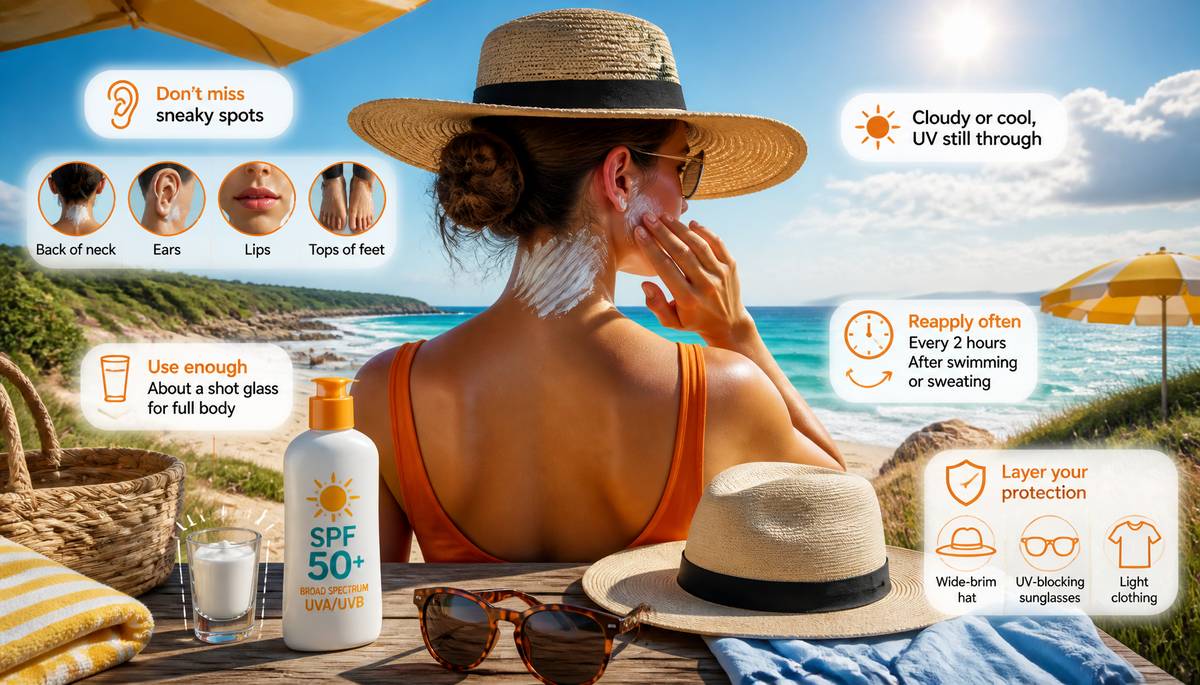 Sunscreen has a way of being slapped on with great confidence and then betrayed by one small forgotten patch. Usually an ear. Sometimes both, glowing away like two little warnings.
The obvious bits get attention; the sneaky ones do not. The backs of the neck, the tops of the feet, the ears and lips are classic misses, despite getting plenty of sun. They are also prime spots for that deeply annoying, very avoidable burn that appears later and makes brushing your hair or putting on sandals feel personal.
Coverage matters just as much as location. Most adults need roughly a shot-glass amount to protect the whole body. Less than that means you are not getting the SPF promised on the bottle, however optimistic the label may look.
Then there is the one-and-done approach, as if sunscreen is wall paint. It is not. It wears off with sweat, swimming and ordinary faffing about, so reapply every two hours, and sooner after a dip or heavy exercise.
Clouds are not a force field, sadly. UV rays still get through on grey days, and cooler weather does not cancel them either, so protection belongs in your routine beyond heatwaves and beach trips.
And sunscreen should not be carrying the entire show on its own. A wide-brimmed hat, UV-blocking sunglasses and light clothing add sensible backup, especially around midday when the sun is at its most fierce.
Posted on 10 July 2026
Copper Peptides May Be The Secret Weapon For Skin That Hates Retinoids
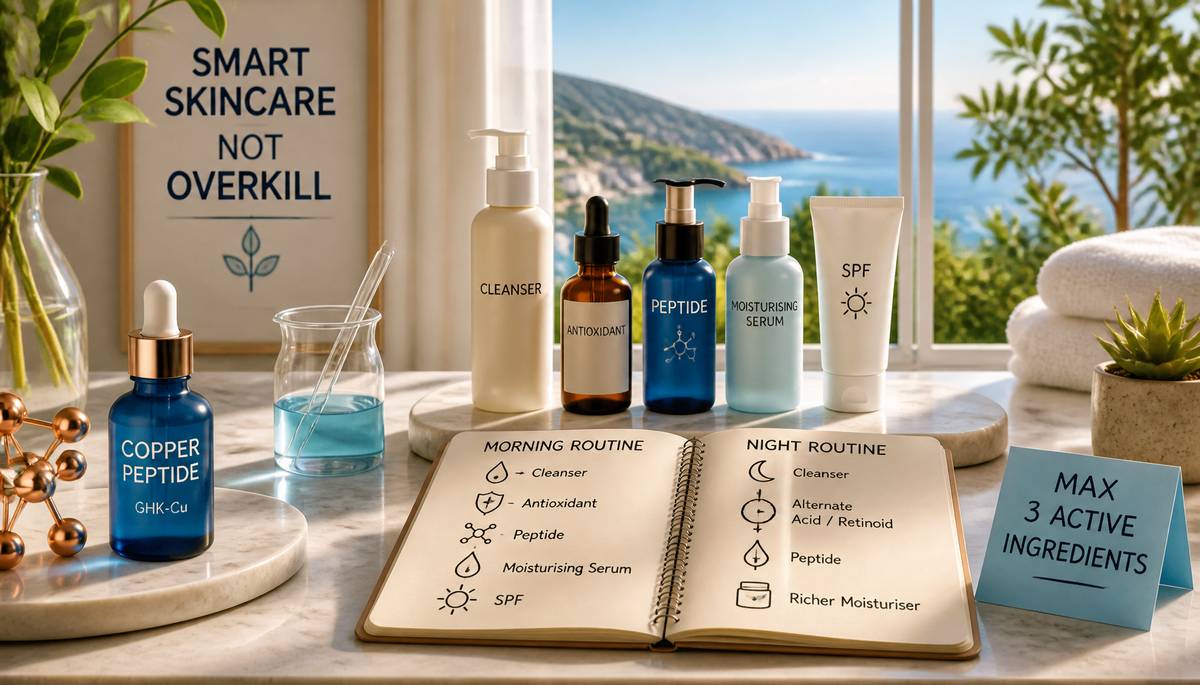 Retinoids are superb until your face decides they’re a form of medieval punishment. If your skin flares, peels or simply refuses to cooperate, copper peptides may be the civilised alternative.
Peptides are short chains of amino acids that act like little messengers, nudging fibroblasts to make more collagen. Among the peptide clans, copper peptides — especially GHK-Cu — are the intriguing ones. They occur naturally in plasma, turn up in wound healing, and appear to support tissue repair and matrix remodelling. That makes them particularly interesting for post-procedure skin and for people who can’t tolerate retinoids.
There is, however, a catch. Copper peptides are notoriously fussy in formulation, and some products are thought to be too weak to do very much. So don’t confuse the ingredient name with guaranteed results.
The other peptide families have their place. Signal peptides and familiar names such as Matrixyl and palmitoyl tripeptides are the dependable plodders, encouraging skin to rebuild over time and helping the barrier along. Neurotransmitter peptides, often sold as “topical Botox”, are rather less miraculous than advertised; the science exists, but getting a topical product to the right target is another matter. Enzyme-inhibitor peptides may help slow the breakdown of collagen and elastin.
Keep the routine sane. In the morning: cleanser, antioxidant, peptide, moisturising serum, then SPF. At night: cleanser, then alternate an acid and a retinoid if you use them, followed by peptides and a richer moisturiser. Don’t pile on more than three active ingredients. Skin is not impressed by exuberance.
Posted on 6 July 2026
Solabia Brings Texture, Tone, and Comfort to In-Cosmetics Global 2026
 At in-cosmetics Global 2026, Solabia arrived like the overachiever who is also somehow moisturized, showing a tight lineup of ingredients built for performance and feel across skin care, make-up, and hair care.
The biggest flex was ViscoPure, which took Gold for Best Functional Ingredient. It is a 100% bio-based water gelling agent that creates high viscosity at very low use levels. Made through a solvent-free eco-designed process, its patented structure helps formulators build clear, stable, fresh-feeling textures while stabilizing emulsions, suspending particles, and shaping aqueous phases as a natural substitute for petrochemical options.
OleoVeil Care, winner of Gold at the Make-Up Bar, targets one of beauty’s most annoying betrayals: pilling. This amphiphilic film-forming emollient combines hydrophilic and hydrophobic blocks for strong skin affinity, smoother glide, water and transfer resistance, and a silicone-like finish. Solabia also presented data pointing to hair benefits, including better curl definition and volume control.
On the active side, Bloomlight addresses neuropigmentation. Sourced from French organic lemon thyme, it uses exosome-mediated pathways to act on early neurogenic triggers and pigmentation linked to stress and environmental exposure. At 3%, clinical testing showed better tone uniformity and fewer visible dark spots.
3Dermilyn GH, from French organic plantain seed mucilage, is a COSMOS-approved active for sensitive, weakened skin, supporting regeneration, soothing, and sensory comfort.
A Texture Corner featured 11 formulas demonstrating the ingredients under the theme Awaken your senses.
Posted on 2 July 2026
Teen Skincare’s Cult of Excess Is Backfiring
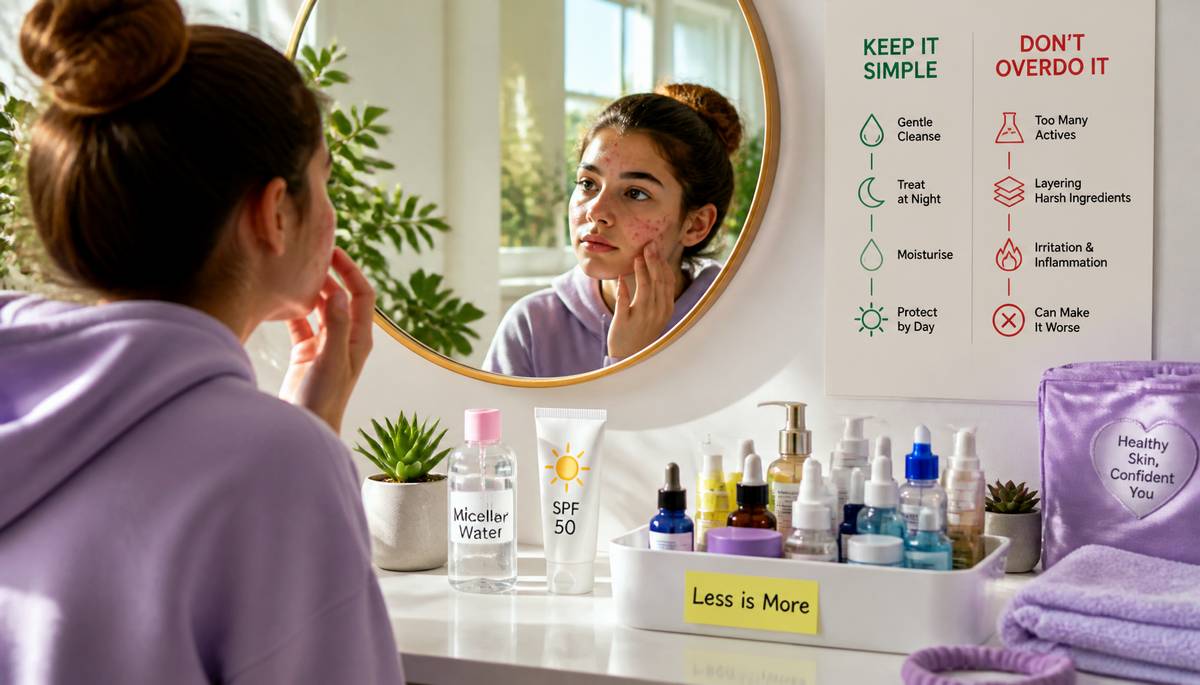 There is, it seems, a new adolescent liturgy: cleanse, tone, acidify, seal, repeat. But a report from Semmelweis University in Budapest suggests the teenage face is being dragooned into adult regimes it neither needs nor tolerates.
Dr. Aniko Kovacs, a dermatologist there, says children and teenagers have, under the catechising glare of social media, begun using cosmetics and ingredient-heavy products far earlier than before. The problem is not skincare per se, but the absurdity of treating healthy, immature skin as though it were a fatigued adult surface in need of industrial intervention.
Young skin is still developing, and is more reactive to active ingredients. The result of an overbuilt routine can be dryness, irritation and contact dermatitis, sometimes painfully itchy or inflamed. Even excessive moisturising in children around 10 or 11 may trigger inflammation around the mouth.
For those without skin problems, Kovacs advises only gentle cleansing, such as fragrance-free micellar water, and a morning sunscreen suited to the skin type. European cosmetics, she notes, are tightly tested and generally safer than products from unknown sources; choosing with a dermatologist or pharmacist is preferable.
Acne remains the commonest adolescent complaint, especially on the face, back and chest. Standard care is plain: cleanse once or twice daily, remove makeup, use acne treatment at night, then moisturiser and sun protection by day. Layering social-media remedies and multiple harsh actives can make everything worse.
Posted on 30 June 2026
Skin Care’s New Promise: Not Younger, Longer
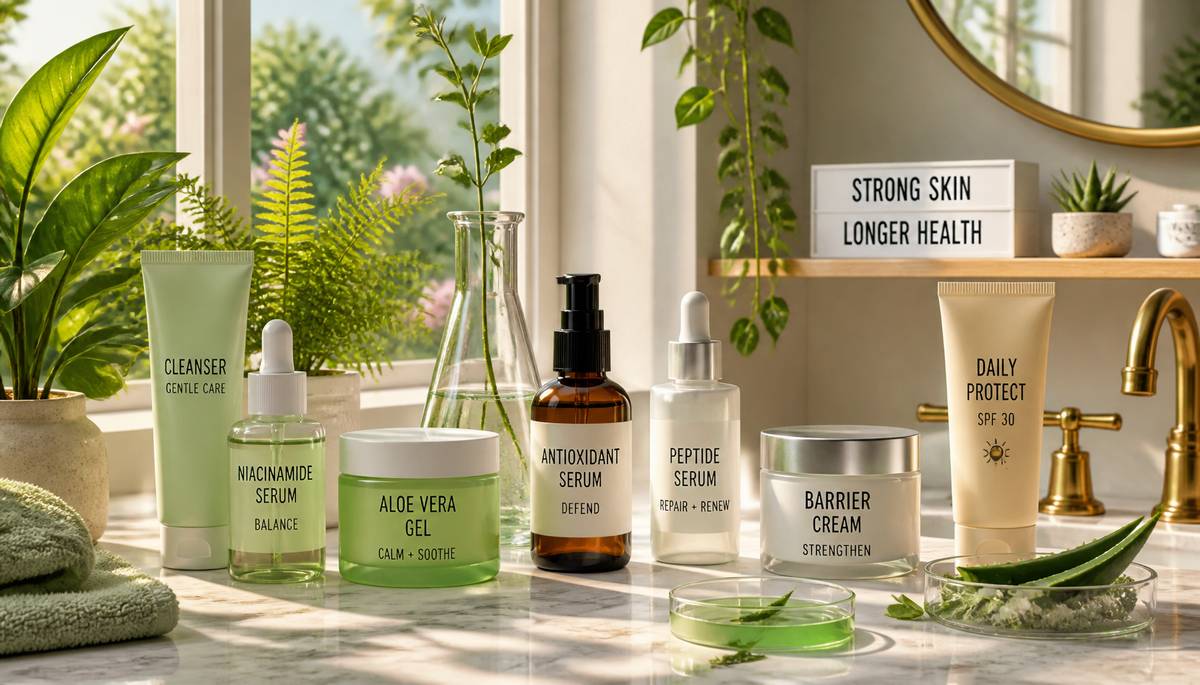 Longevity has already colonized wellness culture through powders, drips, and blender muck; now it’s been marched onto the bathroom shelf. In skin care, the pitch is no longer simply to sand down wrinkles or fade marks. The newer idea is to help skin keep doing its job for longer: hold structure, stay resilient, repair itself, and cope better with time and the usual battering from inflammation, oxidative stress, and the environment.
Dermatologists such as Mamina Turegano, MD, in New Orleans, and Mona Gohara, MD, in Hamden, Connecticut, frame this as a shift from chasing youth toward preserving function. Consumers, Turegano notes, are increasingly interested in health span, prevention, and maintenance rather than only looking younger. Gohara’s distinction is practical: anti-aging responds after damage shows up; longevity tries to strengthen skin before the storm lands.
That doesn’t necessarily mean a totally new bottle of miracle goo. Unlike trend ingredients like exosomes, spicules, PDRN, and stem cells, longevity is more a fresh framework than a single breakthrough compound. The aim is products designed to affect cellular pathways tied to inflammation, repair, oxidative stress, and cell-to-cell signaling.
Cosmetic chemist Amanda Lam in Los Angeles points to anti-inflammatory strategies that vary in mechanism but can lead to similar visible effects, from aloe vera’s cooling action to niacinamide’s effect on inflammatory pathways.
Still, the science hasn’t settled. Whether tweaking these pathways delivers meaningful long-term gains remains uncertain.
Posted on 20 June 2026
From Restlessness to Remedy: How a Cary Couple Built Just Neem
 Peter Radtke had, by most measures, a settled and fortunate life. A biochemist from Germany, he had built a career in Cary and married Magda, his high school sweetheart, also from Germany. Yet he came to feel that comfort alone was not the same thing as purpose; as he put it, his life needed meaning.
That want met an unexpected summons when a friend told him of the Neem tree, found in India and Africa, whose oils help shield it from fungus, insects, and other threats. The suggestion that such protection might benefit human skin struck him as doubtful enough to test. So he went to West Africa.
There, in the Sahara Desert, he encountered more than a specimen. Neem trees served villagers as places of shade and gathering, and he became convinced both of their practical value and of how little their worth was understood across Africa, where the trees now grow widely.
He and Magda turned that discovery into Just Neem, a Cary skincare company. Beginning in their kitchen in 2007, they developed lotions used to soothe burns, treat acne, moisturize skin, and repel insects, among other purposes. Demand came quickly enough that they struggled to keep pace.
Across 20 years the company has known both setbacks and successes. Now, with a new partnership, Radtke believes it may be nearing worldwide recognition and could grow into a $10 million to $20 million business.
Posted on 17 June 2026
Teen Skincare: When Less Product Means Less Damage
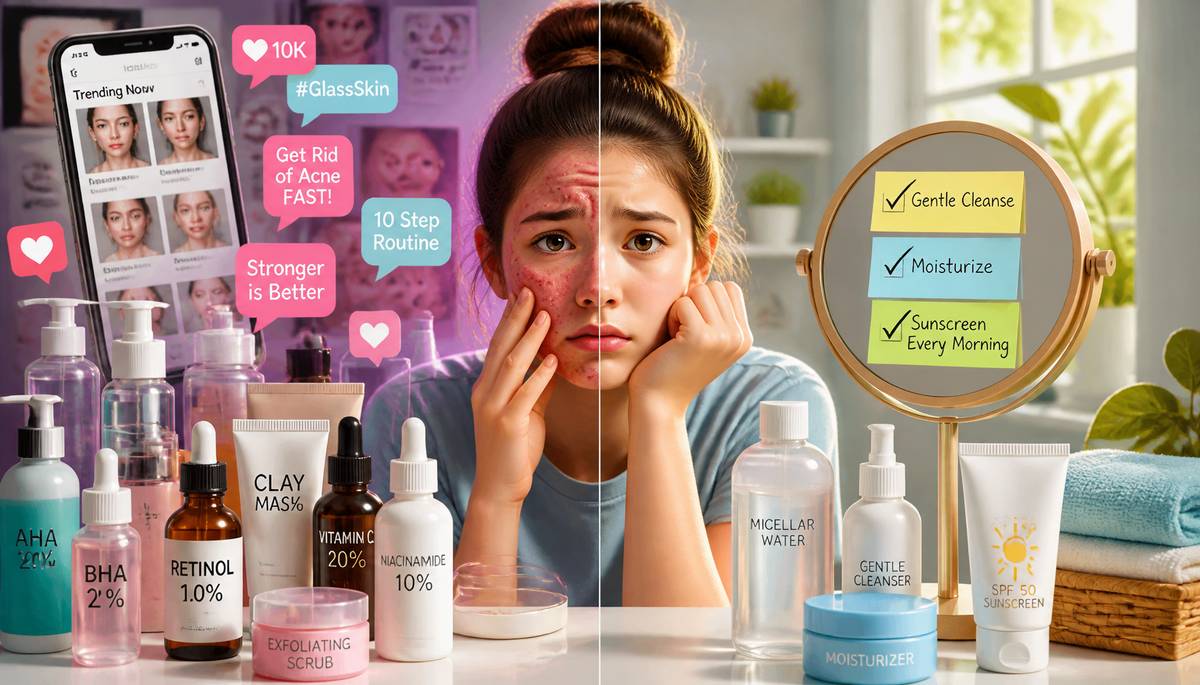 Teenagers are being sold skincare like they’re middle-aged oligarchs trying to sandblast regret off their faces. But according to Dr. Anikó Kovács at Semmelweis University’s Department of Dermatology, Venereology and Dermatooncology, piling adult-grade actives onto adolescent skin is often a brilliant way to turn healthy skin into an irritated little crime scene.
Social media has dragged children and teens into cosmetics and treatment products earlier than before. The problem is that adolescent skin is still developing, which makes it more reactive than adult skin. For those with no real skin condition, especially around ages 10–11, a basic routine is enough: gentle cleansing, such as fragrance-free micellar water, and a morning sunscreen suited to their skin type. Even too much moisturizer can trigger inflammation around the mouth.
A common mistake is slathering strong anti-acne products onto skin that’s merely a bit oily. That can cause dryness, irritation, and contact dermatitis, with redness, itching, and pain.
Actual acne, the most frequent skin issue in adolescence, usually affects the face and sometimes the back or chest. Management should be simple and regular: cleanse once or twice daily with a product for oily skin, remove makeup properly, use acne treatments in the evening, then moisturize and apply sun protection in the morning.
Multiple harsh actives and social-media home remedies can make things worse. If makeup or skincare causes redness, wash it off; panthenol may help mild cases, but persistent symptoms need medical attention. Posted on 2 June 2026
Sardines, Somehow, Are the Main Character Now
 The internet has now done to sardines what it once did to cottage cheese: taken a perfectly ordinary food and slapped a ring light on it. Tinned fish, especially sardines, is being recast as affordable luxury, wellness aid and social-media prop all at once. Pinterest says searches for sardines breakfast have jumped 1,815 per cent, TikTok has nearly 100,000 videos under #sardines, and influencers are calling them everything from protein hero to skincare in a can, which is a truly haunting phrase.
The appeal is easy to map. Sardines are cheap-ish, rich in protein, omega-3s, vitamin D, B12, selenium and calcium from the edible bones, and lower in mercury than tuna because they sit low on the food chain. One or two tins a week fits evidence-based nutrition; eating 1,000 in a month under the banner of sardinemaxxing is content, not guidance.
This glow-up has history. Sardines were heavily used during both world wars, then lost North American ground in the 1960s as supply fell and canned tuna took over. What changed was presentation: Portuguese and Spanish brands brought stylish tins, and pandemic-era interest in shelf-stable food collided with girl dinner, snack boards, higher food prices and Gen Z’s protein obsession.
Toronto retailer Jonathan Larrad says his sardine sales have risen about 10 per cent annually for three years, with younger shoppers building sea-cuterie boards around four or five tins, crackers and white wine.
Posted on 1 June 2026
Pasadena Pulls an All-Nighter for Olive Young’s First U.S. Store
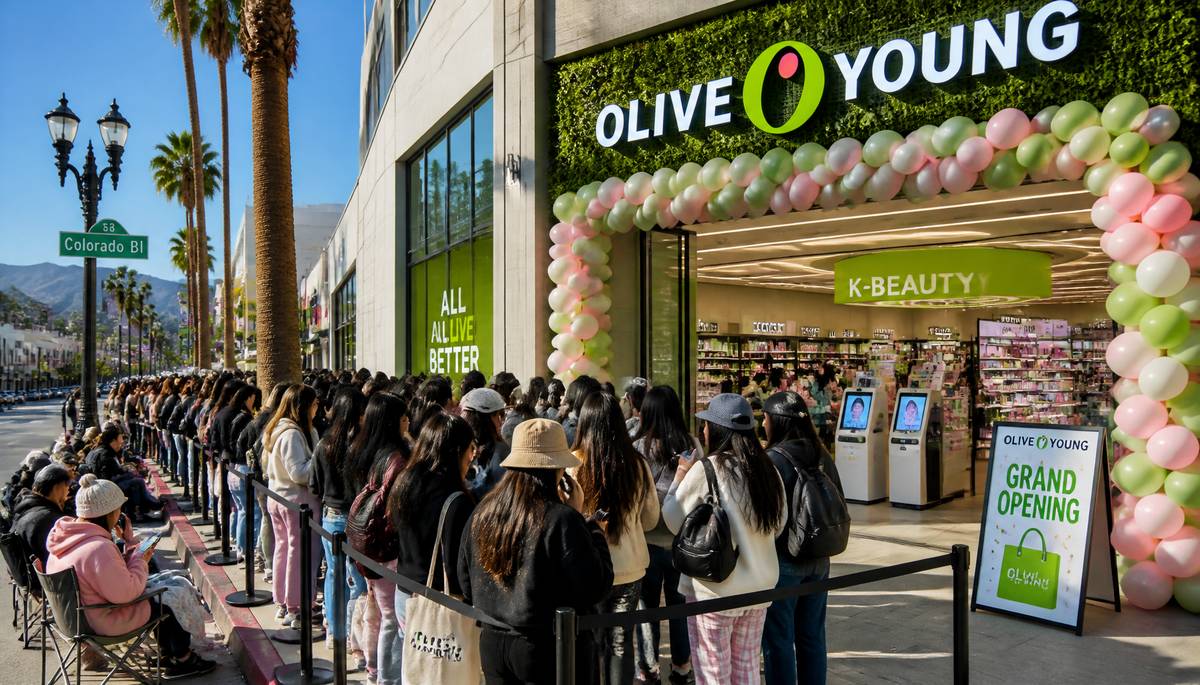 Pasadena spent the night vibrating at a skincare frequency.
Before sunrise Friday, beauty fans had already formed a long, curling line outside 58 W. Colorado Blvd. for the U.S. debut of Olive Young, South Korea’s biggest beauty retailer. Some arrived around 10 p.m. Thursday, slept about an hour, and stayed energized for the 11 a.m. opening.
The new store plants a major K-beauty institution in Southern California with scale and spectacle: more than 500 brands, 5,000 products, personalized skin-analysis tools, education centered on skincare, and testing areas where shoppers can sample products before committing. Built-in sinks let customers try cleansers and other skincare items, while scanners assess skin and scalp condition.
For many in line, the draw was tactile as much as trendy. Olive Young has become a familiar name through travel stories, TikTok, and the social-media pursuit of glass skin, but this was the first chance in the U.S. to handle the goods in person. Opening-day giveaways added fuel.
The turnout also maps a larger shift. U.S. sales of South Korean beauty products reached $2.4 billion over the past year, up 48% from a year earlier, and more than half of Olive Young’s global digital sales now come from American customers.
Founded in 1999, the company has grown to more than 1,400 stores and plans further U.S. expansion, including Los Angeles and New York. For at least one shopper, spending plans were simple: no budget.
Posted on 31 May 2026
Pregnancy Skin Care, Without the Panic
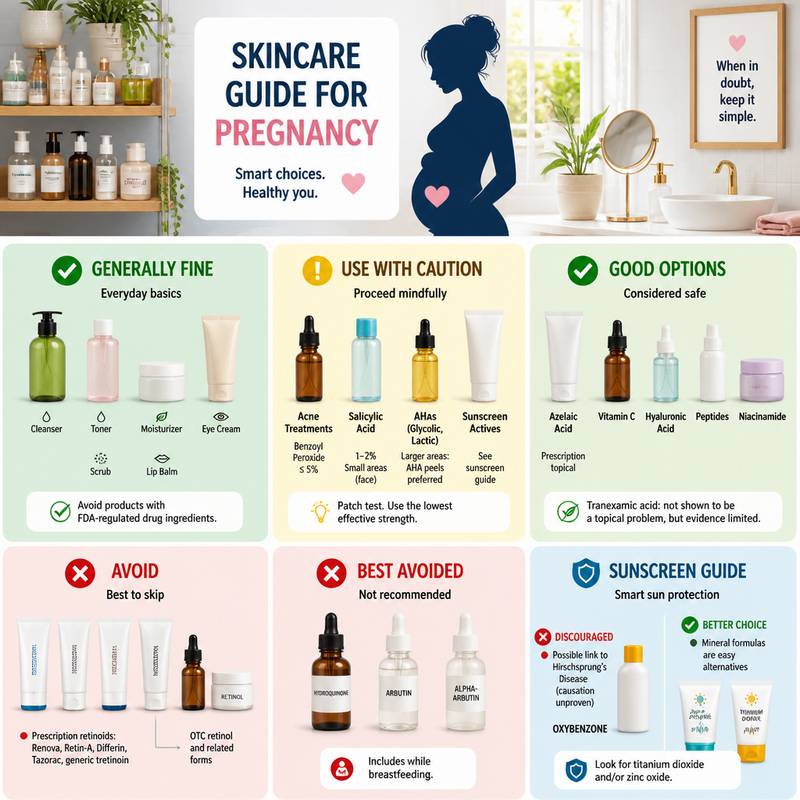 Pregnancy has a way of turning an ordinary bathroom shelf into a moral labyrinth. Suddenly every cleanser looks faintly incriminating. Yet the actual guidance is less melodramatic than the internet suggests.
Most everyday products, cleansers, toners, moisturizers, eye creams, scrubs, lip balms, are generally fine if they don’t contain FDA-regulated over-the-counter drug ingredients. The anxiety begins with acne treatments, exfoliants, pigment-faders, retinoids, prescription topicals, and sunscreen actives.
According to guidance discussed with the American College of Obstetricians and Gynecologists, benzoyl peroxide is considered the preferred pregnancy-safe acne treatment at 5% or less. Salicylic acid, usually 1–2%, is regarded as low risk when used on small areas like the face. Glycolic and lactic acid are also options; for larger body areas, AHA peels are preferred over BHA peels.
Topical azelaic acid by prescription is considered safe and may help hyperpigmentation, breakouts, and rosacea. Vitamin C, hyaluronic acid, peptides, and niacinamide are generally viewed as acceptable. Tranexamic acid has not shown itself to be a topical problem, but evidence remains limited.
Avoid prescription retinoids including Renova, Retin-A, Differin, Tazorac, generic tretinoin, and over-the-counter retinol and related forms. Hydroquinone, arbutin, and alpha-arbutin are also best avoided, including while breastfeeding.
For sunscreen, oxybenzone is now discouraged because of a possible link to Hirschsprung’s Disease, though causation is unproven. Mineral formulas with titanium dioxide and/or zinc oxide are easy alternatives. Posted on 29 May 2026
Your Skin Versus Travel: A Survival Guide
 Travel treats skin like checked luggage: pressurised, jostled, and occasionally ruined. New climates, pollution, UV exposure, stress, disrupted sleep and jet lag can all trigger dullness, breakouts and dryness. Cabin air is especially grim, with humidity around 10–20%, well below the 40–60% range skin generally prefers. At altitude, UV exposure also intensifies, and clouds can reflect rays back at you.
The sensible move is not panic-buying cute miniatures that may annoy your face. Keep your usual routine, just stripped to essentials. Decant only products that tolerate air and light; antioxidants such as retinol and vitamin C need airtight, opaque packaging or they degrade. Consistency matters for treatments targeting redness, clogged pores, acne, hydration and brightening.
For carry-ons, every liquid must be 3.4 ounces or less inside one clear quart-size bag per person. Checked bags can hold full sizes. Sunscreen is allowed, including aerosol SPF, if it follows those limits. Large body sunscreen is often easier to buy on arrival.
On the plane: use broad-spectrum SPF 30+, balm for lips and dry patches, hydrating moisturizer, and, if you run oily, blotting sheets or SPF powder. After landing, cleanse, use a leave-on exfoliant, then moisturize according to climate. Reapply SPF every two hours outdoors.
Also: drink water, manage stress, watch hotel detergents and toiletries, sanitize hands, avoid touching your face, and get some sleep. Posted on 27 May 2026
Six Steps a Day, Maximum, for Skin That Looks Like It Has Its Life Together
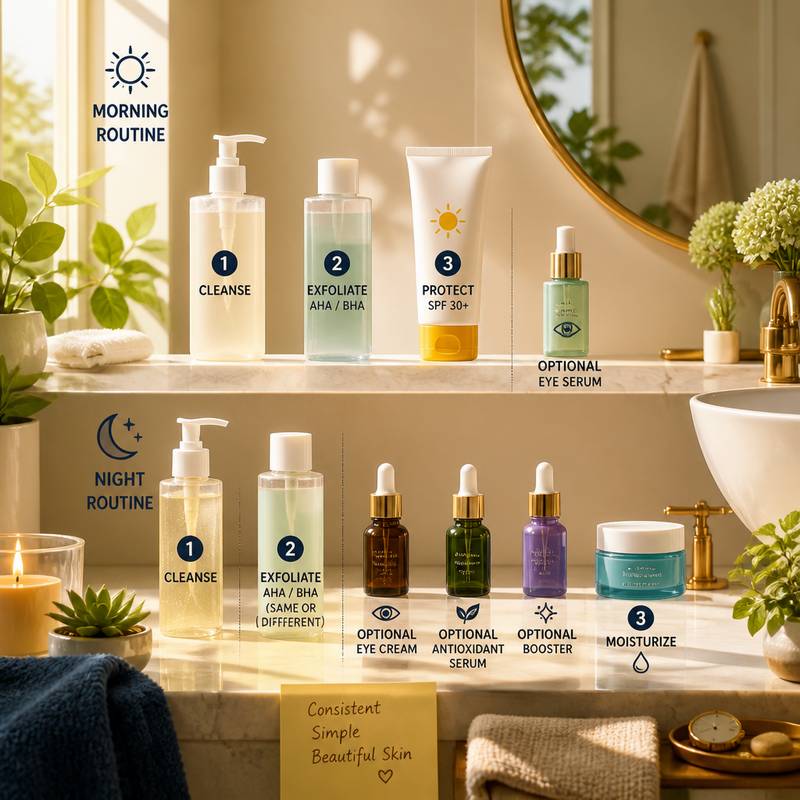 The shortest road to better skin is less a parade than a trio: cleanse, exfoliate, protect. Beautiful skin, or at least the kind that looks as if it sleeps well and pays its bills, does not require a bathroom crowded with bottles. Three steps in the morning and three at night can do much of the lifting.
Start the day with a gentle cleanser matched to your skin type. Follow with a leave-on AHA or BHA exfoliant, the kind that helps with texture and tone and coaxes skin toward a smoother, softer finish. Then apply a broad-spectrum sunscreen, SPF 30 or higher, over face and neck. The whole thing takes under two minutes, which is about the length of one minor regret.
At night, return to the same cleanser. Use either the same exfoliant or a different AHA or BHA depending on what your skin needs; some people alternate between the two. Finish with a facial moisturizer suited to your skin type, again extending it to the neck.
If time opens up and vanity grows hopeful, add an eye serum or eye cream after exfoliation in the morning, before sunscreen. At night, an eye gel or cream can join an antioxidant serum and a booster product, layered after exfoliation and before moisturizer.
Posted on 25 May 2026
Eat Like Your Skin Has Receipts
 Skin aging is basically a group project starring genetics, sun exposure, and the many tiny choices made while tired and standing in a kitchen. A solid skin-care routine helps, sure, but food also gets a seat at the table.
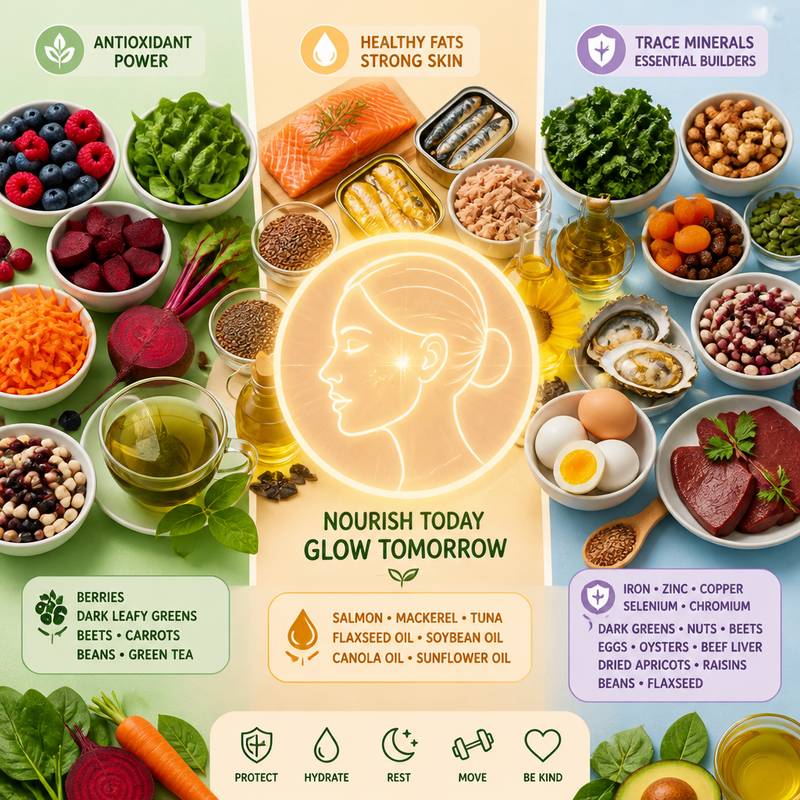
If the goal is skin that looks brighter and less like it has been personally betrayed by time, antioxidants are a strong place to start. Research links antioxidant-rich foods to broad health benefits, including helping protect skin from environmental stress, which is one of the big reasons skin starts looking older. The useful players here include vitamins C and E, commonly found in fruits and vegetables. Practical options: berries, dark leafy greens, beets, carrots, beans, and even green tea.
Fat matters too, specifically omega-3, omega-6, and omega-9 fatty acids. These support skin by helping form the surface layers that keep it strong. Stronger layers generally mean skin that holds up better now and later. Good sources include salmon, mackerel, tuna, flaxseed oil, soybean oil, canola oil, and sunflower oil. For people who do not eat fish, plant-oil salad dressings can help, and a healthcare provider may suggest a fish oil supplement.
Then there are trace minerals: iron, zinc, copper, selenium, and chromium. They are essential to health, and many also act as antioxidants. Dark greens, nuts, beets, eggs, oysters, beef liver, dried apricots, raisins, beans, and flaxseed all help build that lineup.
Posted on 24 May 2026
Adult Acne: The Rude Houseguest That Shows Up After 25
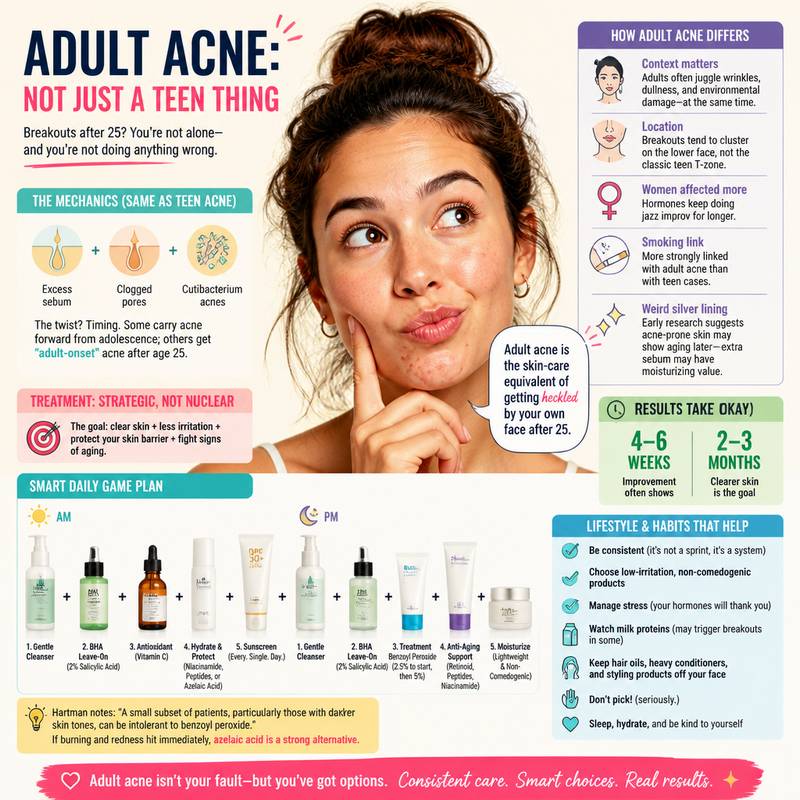 Adult acne is the skin-care equivalent of getting heckled by your own face after 25. The mechanics are familiar: excess sebum, clogged pores, and Cutibacterium acnes. The twist is timing. Some people carry acne forward from adolescence; others get “adult-onset” acne after age 25 like a deeply unfair sequel.
It differs from teen acne mostly in context: adults are often fighting wrinkles, dullness, and environmental damage at the same time. Breakouts also tend to cluster on the lower face, not the classic teen T-zone. Women are affected more often than men because hormones keep doing jazz improv for longer. Smoking is also linked more strongly with adult acne than with teen cases. Weird silver lining: early research suggests acne-prone skin may show aging later, possibly because extra sebum has moisturizing value.
Treatment now is less “nuke it from orbit” and more strategic. Use a gentle cleanser, leave-on BHA, and lightweight anti-aging ingredients like vitamin C, peptides, niacinamide, azelaic acid, and retinoids. At night, add benzoyl peroxide—starting at 2.5% before 5%. Hartman notes, “A small subset of patients, particularly those with darker skin tones, can be intolerant to benzoyl peroxide,” and if burning and redness hit immediately, azelaic acid is a strong alternative. Improvement often shows in 4–6 weeks, with clearer skin in 2–3 months. Consistency, low-irritation products, stress control, watching milk proteins, and keeping hair oils off the face all help. Posted on 22 May 2026
theskindirectory.com (c)2009 - 2026